Bhutan or Nepal for a first trip abroad?
Both are close, visa-free for Indian passport holders, and easy on a first international trip — but they suit very different travellers. A straight comparison.
- Bhutan
- Nepal
- Neighbouring
- First trip
For an Indian passport holder taking a first trip abroad, Bhutan and Nepal are the two easiest countries to reach. Both are short flights, neither needs a visa in the conventional sense, and both give you a genuinely foreign country without a long-haul commitment.
They are not, however, interchangeable.
The short answer
- Bhutan if you want calm, clean air, and a slower, more curated trip — and you do not mind paying more for it.
- Nepal if you want more variety for less money, and you do not mind a louder, busier, rougher-edged experience.
Cost
Bhutan is meaningfully more expensive. The country applies a daily levy per visitor, on top of your travel and hotel costs. It is deliberate policy — high value, low volume — and it works, but it changes the budget.
Nepal has no equivalent charge. For the same money, a Nepal trip generally buys you better hotels or more days.
Entry
Neither requires a visa for Indian nationals, but “visa-free” is not “paperwork-free”:
- Bhutan requires an entry permit, arranged in advance, plus the daily levy.
- Nepal requires no permit for Indian nationals, but you must carry valid photo identity — a passport or voter ID. A driving licence is not sufficient.
Requirements do change. We confirm the current position when you book rather than relying on what was true last season.
What you actually do there
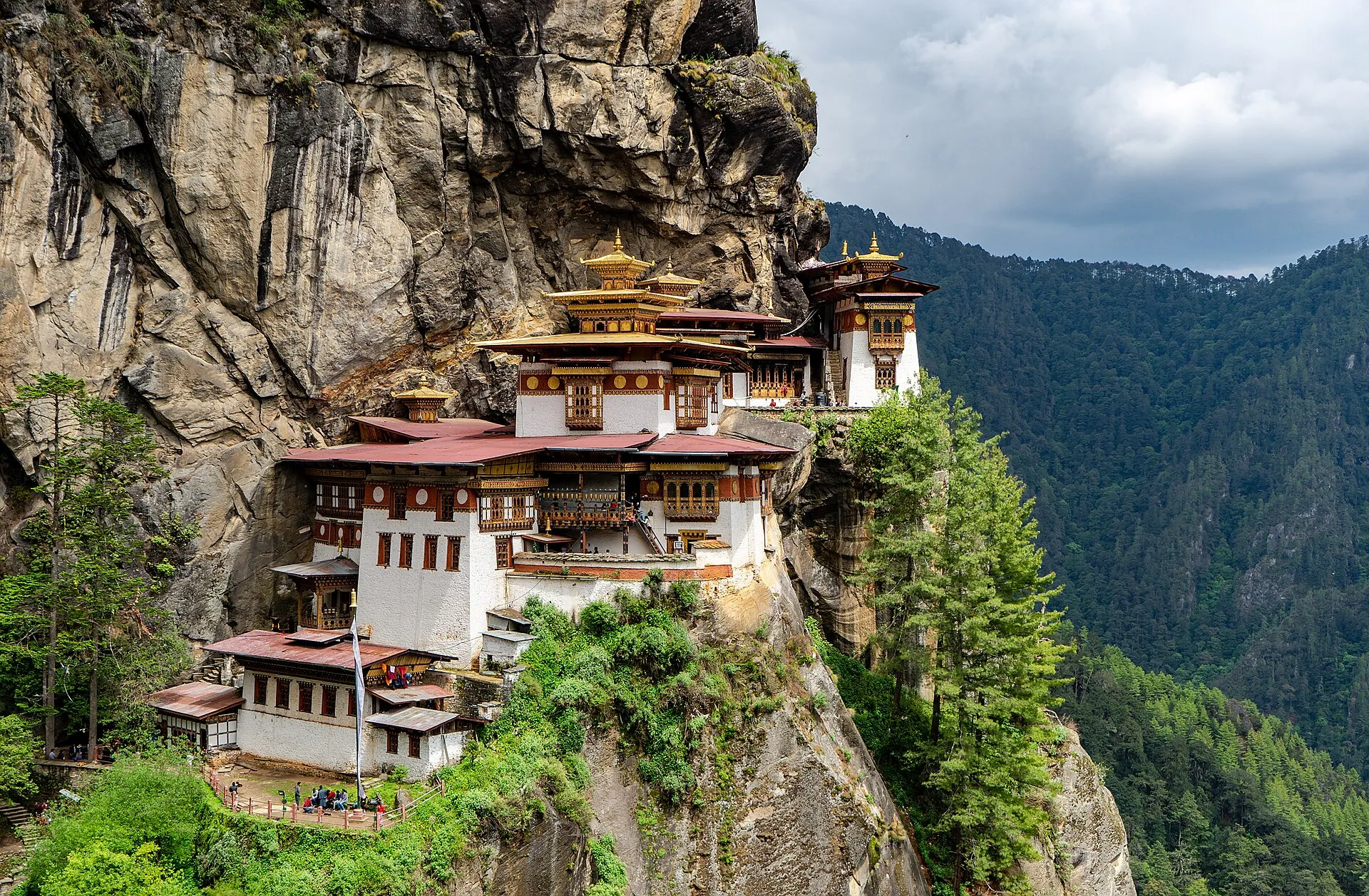
Bhutan is monasteries, valleys and hiking. Its centrepiece is the climb to Taktsang — the Tiger’s Nest — which takes most people four to five hours return and is a real hike, not a walk. Paro and Punakha are quiet. Thimphu is the only place resembling a city, and it has no traffic lights.
Nepal is more varied. Kathmandu’s temple squares are dense, chaotic and fascinating. Pokhara is a lakeside town with Annapurna behind it and the best paragliding in the region. Chitwan adds jungle and rhino, which Bhutan has no equivalent of.
Who each suits
Choose Bhutan if: you want quiet, you are reasonably fit, you value clean air and low crowds, you are on honeymoon, or you find busy destinations tiring.
Choose Nepal if: you want mountains and wildlife in one trip, you are travelling with a mixed-age family, your budget is the deciding factor, or you want adventure activities.
When to go
Both are best in October and November — post-monsoon, clear mountain views, settled weather. March to May is the second window, warmer, with rhododendron in flower.
Avoid the monsoon months for both. In Nepal the mountain views disappear entirely, which removes much of the point.
Altitude
Worth saying plainly: parts of both countries sit high enough that altitude affects some people. Bhutan’s passes and Nepal’s higher viewpoints are the ones to watch. If anyone travelling has a heart or respiratory condition, tell us before booking and we will plan the ascent accordingly — or advise a different itinerary.
Our packages
We run both as 7 nights / 8 days. Bhutan covers Paro, Punakha and Thimphu; Nepal covers Kathmandu, Pokhara and Chitwan. Either can be shortened or extended.